30th Anniversary of the Museum's Opening, 100th Anniversary of Claude Monet's Death: Claude Monet Exhibition
● All 8 Monet works owned by the Asahi Group will be exhibited together for the first time in 10 years* ● "Jewel Box in the Ground" (Underground Pavilion), an exhibition room designed by Tadao Ando specifically for the "Water Lilies" series ● Witness Monet's magnum opus from his later years As the museum celebrates its 30th anniversary, a passageway leading underground from the main building, "Oyamazaki Villa," which is over 100 years old, leads to a circular exhibition room designed by Tadao Ando, created specifically to display Claude Monet's "Water Lilies." In this "Jewel Box in the Ground" (Underground Pavilion), all 8 Monet works, one of the core pieces in the museum's collection, will be exhibited in two phases, six pieces each. Five "Water Lilies" paintings and three others, including "Japanese-style Drum Bridge," will be displayed together for the first time in 10 years. Enjoy an immersive viewing experience surrounded by Monet's magnum opus in a tranquil space that harmonizes beautifully with the garden and surrounding nature. *Some exhibits have been changed, with 6 pieces displayed in each of the first and second periods.
List of Works
Go, go go! Team Ōkyo - Maruyama Ōkyo and the Artists He Mentored
Maruyama Ōkyo (1733–1795), best known for his charming paintings of puppies, was a great artist who fostered many disciples and laid the groundwork for what we recognize today as "Nihonga" (Japanese painting). This exhibition will feature works by Maruyama Ōkyo and his direct disciples such as Nagasawa Rosetsu, along with an unprecedented 40 newly discovered works by Ōkyo's grand-disciple, Yano Yachō. This is a must-see exhibition for Edo painting enthusiasts. The exhibition is organized into three periods.
During the Edo Period (to 1868), art flourished in Kyoto. While Itō Jakuchū (1716–1800) is well known, many other excellent painters also left their mark. Another innovator, Maruyama Ōkyo (1733–1795) was born nearby in what is now Kameoka City. During his twenties, learning how to incorporate Western perspectives, he mastered megane-e, that is optical pictures, which have a 3D look when seen through a convex lens viewing device. Under Kanō school painter Ishida Yūtei (1721–1786), he studied the fundamentals of the dominant Japanese painting style. Later, Ōkyo settled into a painting method that depended on shasei (sketching from life). The naturalism he introduced shook up a pa
Antonio Fontanesi: Transcending Landscape ―A European Artist at the Opening of Japan
In the late 19th century, the Italian painter Antonio Fontanesi (1818–1912) educated burgeoning artists such as Asai Chu, Koyama Shotaro, and Matsuoka Hisashi as a teacher at the Kobu Bijutsu Gakko (Technical Art School). In terms of European art history, Fontanesi was influenced by the Barbizon artists and J.M.W. Turner before emerging as a painter of unique poetic landscapes. This exhibition, organized in cooperation with the Turin Civic Gallery of Modern and Contemporary Art (GAM) and the Turin Museums Foundation, provides a comprehensive overview of Fontanesi’s entire career while highlighting his originality. In addition, works by Japanese students and later generations of Italian artists shed light on the artist’s influence and legacy. By painting a complete picture of Antonio Fontanesi, the exhibition shows that he was much more than a “foreign expert” employed by the Japanese government.
The Pinnacle of Edo Entertainment: UTAGAWA KUNIYOSHI – the Super Creator of Ukiyo-e!
Active in the mid-19th century, the ukiyo-e artist Utagawa Kuniyoshi (1797-1861) made musha-e (warrior pictures) based on the classic Chinese novel Shui hu zhan (The Water Margin) along with a diverse range of other works such as bijin-ga (pictures of beautiful women) and landscapes. In this exhibition, we introduce the captivating world of Kuniyoshi through some 200 ukiyo-e works and immersive videos.
Leica Camera Japan is pleased to present "what matters," a solo exhibition by photographer Kisshomaru Shimamura. The exhibition features a new body of work created during the artist's travels through New York, Portland, and Los Angeles. Rather than setting predetermined destinations or subjects, Shimamura wandered each city on foot, meeting people and allowing himself to be guided by the rhythm of the places he encountered. In Portland, where he once lived, he reunited with old friends and spent much of his time in everyday settings such as cafés, parks, and skate parks.
The photographs do not depict extraordinary moments or remarkable events encountered during travel. Instead, they portray conversations with friends, people passing by on city streets, and landscapes that prompted the artist to pause. These are scenes that might appear entirely ordinary, familiar to anyone. Yet within each image lies a quiet trace of the time the artist spent there—moments in which his attention and presence became inseparable from the landscape itself. Even the exhibition title, "what matters," was not conceived before the journey began. It emerged only afterward, as Shimamura reflected on the ph
This time, ZENBI—Kagizen Art Museum—will be holding a collection exhibition centered on the book "Kagizen: Behind the Scenes of a Kyoto Confectionery Shop" (authored by Yoshiya Imanishi), published in 2024. When you think of Kagizen Yoshibo (hereinafter referred to as Kagizen), many people will surely think of works such as the "Large Zelkova Wood Display Shelf with Wipe-Lacquer Finish" (1932) and the "Mother-of-Pearl Inlaid Kuzukiri Container" (1932) by wood and lacquer artist Tatsuo Kuroda (1904-1982). The wrapping paper for the confectionery has been designed by painter Etsuro Suzuki (1924-2013), the paper bags by contemporary artist Akira Yamaguchi (1969-), and various artists have also created the decorative paper used depending on the season and purpose. Titled "Behind the Scenes," this exhibition will introduce the collection items that have adorned the confectionery and the shop, along with confectionery molds and other items indispensable to Kagizen's confectionery making. The exhibition also features photographs used in the book showing the process of making the sweets. Please come and see the "behind the scenes" that support Kagizen. [Exhibiting Artists] Kanjiro Kawai, Tatsuaki Kuroda, Etsuro Suzuki, Akira Yamaguchi, and others *The book "Kagizen: Behind the Scenes of a Kyoto Confectionery Shop" (by Yoshiya Imanishi) can also be purchased at the Kagizen Ryobo online shop [https://www.kagizen.co.jp/].
本展では、近年取り組んでいる、異なる時間、場所、被写体による写真を一枚に組み合わせる手法によるStudy pieceシリーズ〈The Meeting of Two Eyes〉から、写真家の記録と時間を巡る思考の軌跡を辿ります。
異なる時間、場所、被写体による写真を上下に組み合わせる独自のStudy pieceを再現。時間や場所を越えて編まれたそれらのイメージは、ランダムでありながらも内在する連動性やリズムを感じさせ、読み手に新たな視覚体験をもたらします。詳細、ご注文は風光オンラインページよりご覧ください。
Harada Kazumasa Photo Exhibition "The Meeting of Two Eyes"
Yamamoto Masao ’s work flows from a singular, enduring theme: "Humans are an inseparable part of nature." By capturing the fleeting whispers of wind and light, he weaves a world brimming with tranquility and evocative voids for the imagination. This exhibition features approximately 30 selected works from his archive. We invite you to experience these fragments of time and memory that stir the depths of the viewer’s soul.
Born in Aichi Prefecture in 1957. Began photographing at the age of 16, later studying painting before turning fully to photography. Known for his use of techniques such as gelatin silver printing, he first exhibited at Torino Fotografia ’87 in Italy. In 1994, his exhibition at Shapiro Gallery in San Francisco brought him international recognition. His first photobook, A Box of Ku, was published in 1996 by Nazraeli Press (USA). In 1998 he held a solo exhibition at Yancey Richardson Gallery in New York, followed by his first European solo exhibition in 2006 at Galerie Camera Obscura in Paris, after which he became increasingly active in Europe. In 2014 he published Small Things in Silence (Seigensha), marking the 40th anniversary of his career. His field of activi
His beautiful typesetting has been backed by his unquestionable knowledge and skill as a printer. He did not shirk from typographical experimentation with the "Broadside" (broadsheets) printed and published during the 1980s and the 1990s, when letterpress printing no longer played a central role in the transmission of information. He explored the artistic potential of letterpress printing. His originality also bloomed freely with the typographic maps (maps made up solely of text) that he created in later years. Alan Kitching followed his own path, without being swayed by the trends and circumstances surrounding printing. He can only be described as a treasure, without peer, whose work is immediately identifiable at first glance.
Special Exhibition: A Symphony of Chrysanthemums — Masterpieces by the Successive Generations of the Raku Family
Chrysanthemums, which bloom with dignified elegance even in the cold, are also known as 'the flower of the reclusive hermit'. They have been likened to the image of an 'hermit' (a person who withdraws from worldly affairs), and have long been regarded as a symbol of sages and virtuous gentlemen, representing purity, integrity, and noble character. In ancient China, many poems themed on chrysanthemums were composed by literary figures such as Tao Yuanming, who was particularly devoted to the flower. It is said that chrysanthemums were introduced to Japan during the Heian period, and from around the time of the Kokin Wakashū (Collection of Ancient and Modern Japanese Poetry), they began to appear frequently in waka poetry.
Later, during the Edo period, around the Genna and Kan'ei eras, chrysanthemum cultivation became widespread among the general public, and by the mid-Edo period, around the Genroku era, it had become a major craze. A wide variety of chrysanthemums were cultivated, and not only did chrysanthemum-viewing and flower competitions flourish, but the flower also became a highly popular motif in kimono designs and various works of art.
Makoto Egashira Solo Exhibition We are pleased to present a solo exhibition by contemporary artist Makoto Egashira, who creates sculptures and installations using floral blankets as his material, and who is also active in a wide range of projects, including collaborations with GUCCI. The theme of this exhibition is "Shell". Please come and see it. We look forward to your visit. ・Online store Open https://baiken.jp/online/
Hakari Contemporary is pleased to present "on the pier," a solo exhibition by Tokyo-based artist Naoto Nakamura. This exhibition was conceived as a prize for the winner of the 2024 Currents Art Award. Prompted by the travel restrictions imposed by the COVID-19 pandemic, Nakamura has continued to create works focusing on the various structures that shape modern society and surround the people who live within it, using architecture and language as starting points. In this exhibition, Nakamura, referencing the mechanisms of discipline and surveillance that have governed modern society, questions how our desire to escape structures works now that travel restrictions have been lifted, where it leads, and what point it ultimately reaches.
Especially for those of us living on an island nation, the distance to neighboring countries evokes a vague longing, but also forces us through numerous cumbersome procedures. One response to this is presented as an installation centered around a new video work, "IN ADEMIA." This film, Nakamura's first short silent film, stars rapper Otagiri and actor Wataru Naganuma, depicting two men at the mercy of a board game in a world where a city has sunk into the sea.
This exhibition offers an opportunity to consider the invisible forces that shape our thoughts and actions, and the possibility of deviation that arises within them. We invite you to take this opportunity to view the film.
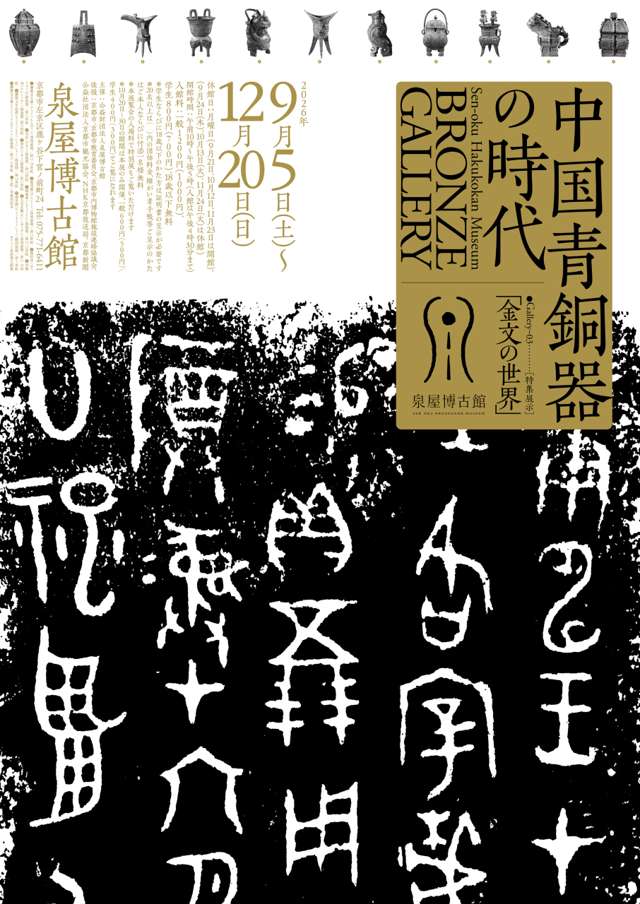
Bronze Gallery: The Age of Chinese Bronze Age - Gallery 3 Special Exhibition: "The World of Bronze Inscriptions"
The bronze vessels of the Yin and Zhou dynasties, characterized by their intricate and delicate forms, sometimes bear inscriptions of characters used by the people of that time. These ancient Chinese characters—bronze inscriptions—are the older forms of the Chinese characters we use today, and offer valuable clues to understanding the society and culture of that era. Carefully reading the inscriptions allows one to experience a sense of reality, as if hearing the very breath of the ancient Chinese people. The beauty of the characters themselves is also remarkable, captivating and influencing calligraphers throughout history. This autumn, the Bronze Gallery will hold a special exhibition focusing on these bronze inscriptions, exploring their rich world together with the Sumitomo Collection. This is a must-see for anyone interested in bronze vessels or ancient China, as well as calligraphy and ancient characters.
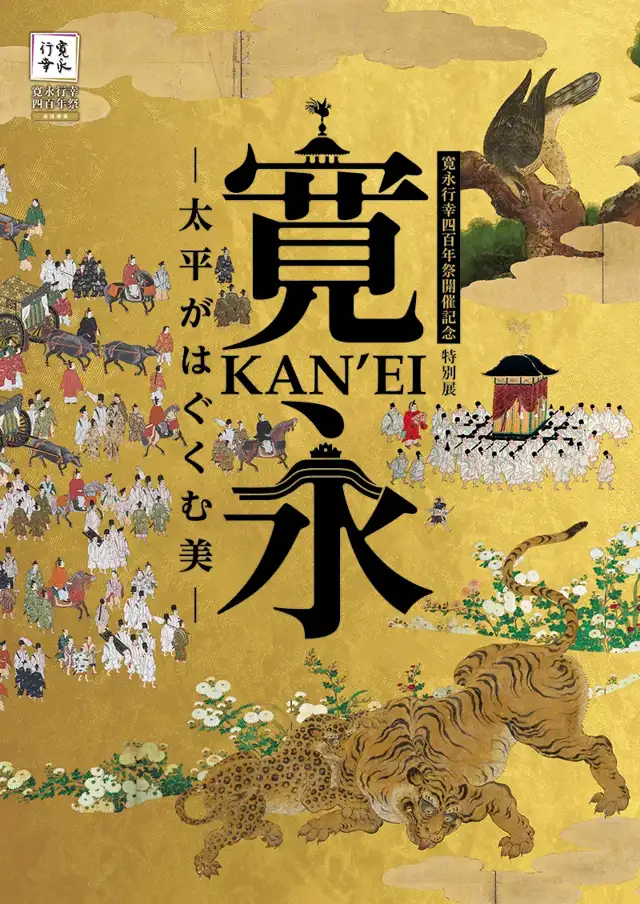
Special Exhibition Commemorating the 400th Anniversary of the Kan'ei Imperial Visit: The Kan'ei Imperial Visit and the Cultural Figures of the Flower Capital
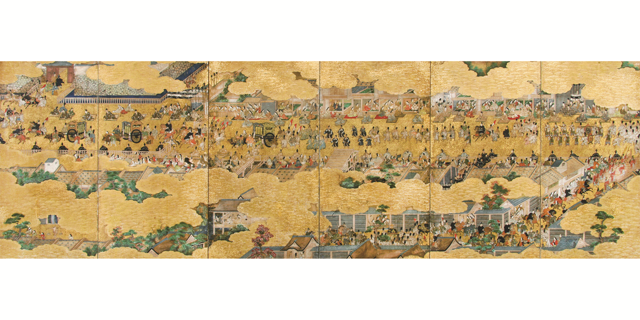
In September of the third year of the Kan'ei era (1626), during the early Edo period, Emperor Go-Mizunoo visited Nijo Castle in Kyoto at the invitation of the retired shogun Tokugawa Hidetada and the current shogun Tokugawa Iemitsu. On the first day, September 6th, the city of Kyoto was filled with unprecedented excitement as the imperial family, court nobles, the shogun, and daimyo from all over the country gathered for a grand procession. The Kan'ei Imperial Visit can be said to have heralded the arrival of an era of peace and spurred the stirrings of a new culture. This exhibition looks back on this historical event, focusing on the "Nijo Castle Imperial Visit Folding Screen" (a Kyoto City designated cultural property) owned by the Sen-oku Hakukokan Museum, which vividly depicts the imperial procession. Furthermore, it examines the Kan'ei culture that developed from before and after this event into the latter half of the 17th century, starting with a single woman named Tofukumonin (Tokugawa Kazuko). As the daughter of a shogun and later the empress of the emperor, she was surrounded by a constellation of cultural figures, including Emperor Go-Mizunoo, Sen no Sōtan, Shōkadō Shōjō, Kobori Enshū, and Nonomura Ninsei. Through interactions that transcended social class, they forged their own unique forms of beauty. The exhibition traces her footsteps in beauty and interaction, featuring items associated with Tōfukumonin, who served as a bridge between the public, military, and common people. Nearby are numerous temples and shrines associated with the early Edo period's restoration, including Kōunji Temple, Tōfukumonin's family temple. Spend some time reflecting on the Kan'ei culture in this place that still conveys the spirit of the refined people of that era.
get ready! ↓ get ready! ↓ get ready! ↓ get ready! ↓ get ready! ↓ get ready! ↓ get ready! ↓ get ready! ↓ get ready! ↓ get ready! ↓ get ready! ↓ get ready! ↓ get ready! ↓ get ready! ↓ get ready! ↓ get ready! ↓ get ready! ↓ get ready! ↓ get ready! ↓ get ready! ↓
The Hosomi Art Foundation holds diverse exhibitions around the 1,000-piece Japanese art collection. Featuring works from the Jomon/Yayoi periods to Edo-period painting by various schools, the collection represents almost all periods of Japanese art in the genres of painting, sculpture, decorative art and calligraphy, among which are some first-rate works by Ito Jakuchu.
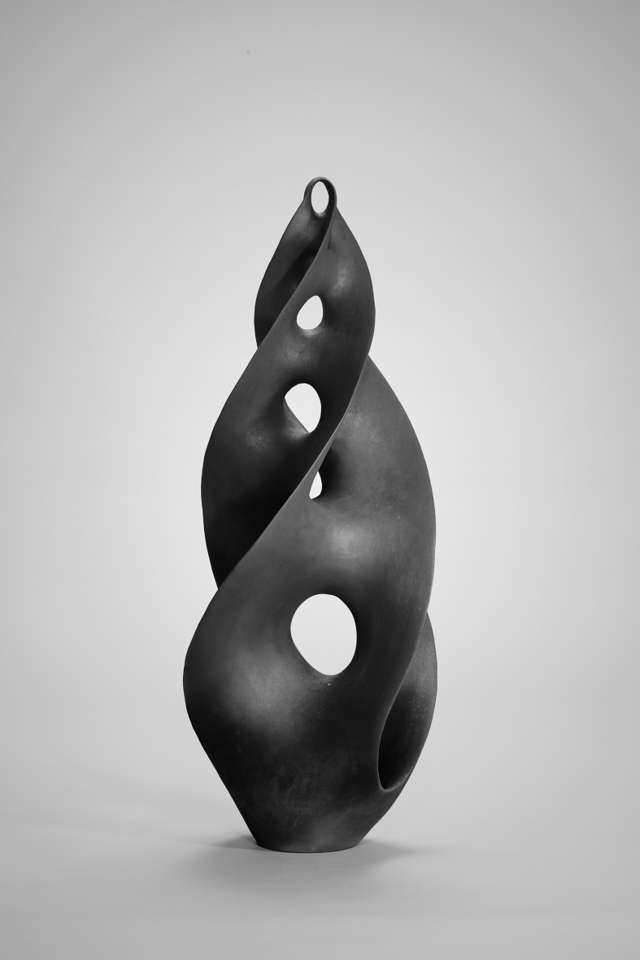
Yamamoto grew up in Asuka, Nara, not far from the Kitora Tumulus. Born into a family of potters, he comes from a lineage in which his grandfather made clay bells for Asukadera Temple.
When I visited Yamamoto in Soni Village, Nara, where he now lives, he took me to nearby Byobuiwa. Beyond a beautiful meadow rises an immense wall of columnar rock, far exceeding the scale of the human body; turning around, one can see the Kii Mountains in the distance. It is a place that feels almost like a hidden paradise.
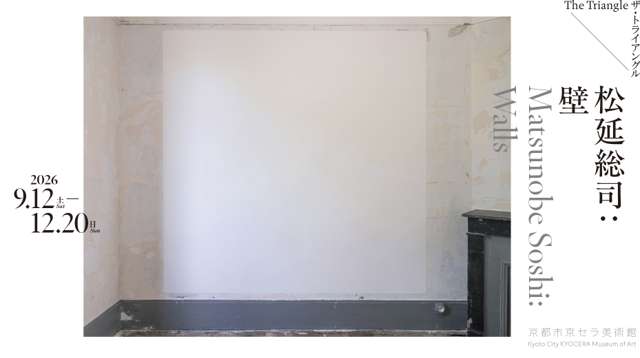
Matsunobe Soshi is an artist who engages with intangible phenomena such as lines, shadows, the unconscious, and the ground (background) through installations, sculptures, drawings and various other media. Using everyday motifs such as wallpaper, rubber bands, and graffiti as materials, he has presented works that focus on the processes by which these materials are made, as well as their functions and relationships. His practice calls into question the act of creation itself, prompting us to reconsider the premises of making, seeing, and being. Alongside introducing Matsunobe’s consistent approach, this exhibition offers viewers an opportunity to newly reflect on their own ways of perceiving and interpreting the world. The Triangle The Triangle is a space newly created for the reopening of the Kyoto City KYOCERA Museum of Art. It aims to nurture and support emerging artists, especially those associated with Kyoto, and to provide opportunities for museum visitors to experience contemporary art. In order to connect the artist, museum, and viewer in a triangle and deepen those connections, the space hosts an eponymous series of special exhibitions and presents new artistic expression f
30th Anniversary Exhibition: Georges Rouault – A Compassionate Gaze, a Prayerful Brushstroke
Georges Rouault (1871-1958), a devout Catholic, created a unique style of art in modernizing France, distancing himself from the contemporary artistic trends. The harsh expressions of acrobats and other people living on the fringes of society, which he initially depicted in dark tones, gradually transformed over time, becoming gentler and more compassionate, and the layers of paint he applied increased in thickness. This evolution in expression and technique can also be seen in his works depicting biblical themes, suggesting that the painter found Christ in the figures of secular people and attempted to depict both together. This exhibition, one of the special exhibitions commemorating the 30th anniversary of the museum's opening, brings together all four of Rouault's works from the Asahi Group Oyamazaki Villa Museum of Art's collection, along with approximately 35 works from the Panasonic Shiodome Museum of Art, a center for Rouault research in Japan, highlighting the prayers the painter expressed in both sacred and secular themes.
The Shape of Love - The Legendary Erotic Print "Chigo Zoshi" Unveiled -
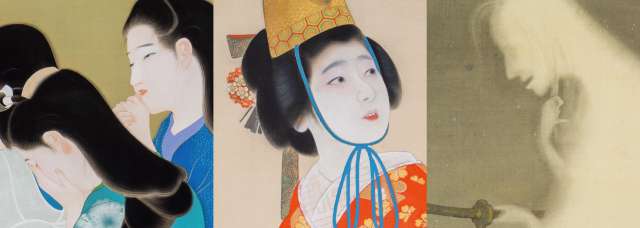
Love and desire, the poignant emotions of people yearning for one another—artists depicted these in the form of "shunga" (erotic prints). It is believed that these prints already existed during the Heian period. The *Chigo Zōshi*, being publicly displayed for the first time in this exhibition, is an illustrated scroll from the early 14th century depicting intimate relationships between young boys and monks, accompanied by accompanying text. It is considered a legendary shunga, whose existence was only known through copies and books.
Also on display is a scroll copy of the *Koshibagaki Zōshi*, one of the oldest shunga depicting sexual activity in Japan, made by the Edo period artist Tani Bunchō. Furthermore, the exhibition includes hand-painted shunga by Tsukioka Settei and others, as well as Katsushika Hokusai's masterpiece *Nami Chidori* (Waves and Plovers), and works related to "love" by Uemura Shōen and Kaburagi Kiyokata.
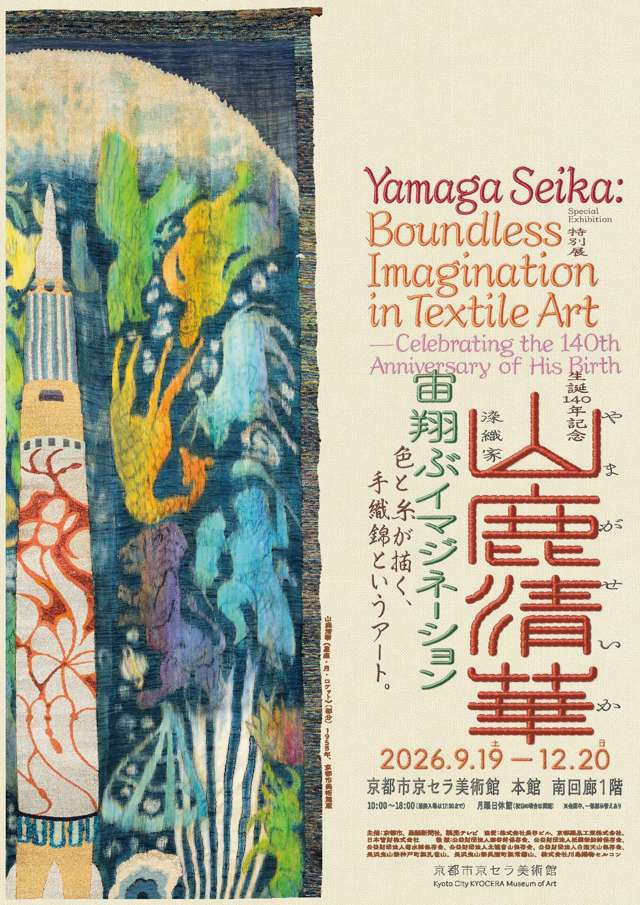
Yamaga Seika: Boundless Imagination in Textile Art
Yamaga Seika, a pioneer of textile art. This long-awaited retrospective—the first in 40 years—will be held at Kyoto City KYOCERA Museum of Art. Yamaga developed teori-nishiki (handwoven brocade), a distinctive form of textile art in which the artist oversees every stage of production, from design and material selection to the weaving process itself. Through representative works and archival materials, this exhibition traces the career of this little-known Kyoto-born artist, featuring tapestries created for the Gion Festival as well as spatial decorations produced in collaboration with architect Murano Togo, among other works. Born into a family engaged in letterpress printing in Kyoto, Yamaga Seika (1885–1981) began studying Nishijin-ori textile design and nihonga painting in his teens. He later became a student of Kamisaka Sekka, under whom he further expanded the scope of his artistic practice. Yamaga gained recognition after developing teori-nishiki (handwoven brocade), a form of tapestry weaving in which the artist personally undertakes every stage of production—from design and yarn selection to the weaving process itself. In 1927, he was awarded a Special Prize in the newly es
The herbal tea "Shibashi Tea" for temporary use is finally complete! A pre-sale event and launch celebration event, "Tsuyukusa Clinic presents Tea Room Shibashi - Tea Talk and Medical Examination -", will be held on September 21st and 22nd.
Since opening, Shibashi has been serving seasonal herbal teas delivered from Tsuyukusa Clinic in Chofu, Tokyo. Herbal tea has become such a popular menu item that many people say, "Shibashi means herbal tea." Now, thanks to the help of everyone at Tsuyukusa Clinic, we have finally created our own herbal tea, "Shibashi Tea," which we have been longing for! To commemorate this, we will be welcoming Dr. Date, the director of Tsuyukusa Clinic, and holding two events, a "Tea Talk" and a "Consultation," at Shibashi on September 21st (Monday, public holiday) and 22nd (Tuesday, public holiday). -- [Tea Talk] Tea Talk at Shibashi (held on September 21st) This is an event where you can hear from Dr. Date of Tsuyukusa Clinic about the basics of herbal medicine and how to maintain your health in autumn. Let's relax and enjoy the new herbal tea, "Shibashi Tea," which will be released on the day. Date: Monday, September 21, 2026 (National Holiday) Time: Doors open at 3:30 PM / Performance starts at 4:00 PM / Performance ends around 7:00 PM Price: 3,800 yen (includes unlimited refills of several types of herbal tea, special Japanese sweets from Tsuyukusa Clinic, and lecture fee) How to reserve: Instagram DM, by phone, or in person at the store (reservations will close once capacity is reached) *Reservations are also being accepted for "Shibashi Tea" (7pcs, 3,000 yen), which will be sold on the day, exclusively for those attending the tea party or consultation! [Consultation] Consultation at Shibashi (held on September 22) Tsuyukusa Clinic's outreach consultation at Shibashi is happening! This is a rare opportunity to receive a direct consultation from Director Date. Why not consult about any health concerns you have during a 15-minute consultation? Consultations are also available for those who are not attending the tea party. Date: Tuesday, September 22, 2026 Time: Reception from 9:00 to 11:30 Price: 3,000 yen for 15 minutes (Pre-consultation registration required) How to make a reservation: Instagram DM, phone, or in person at the store (reservations recommended) -- "Shibashi Tea" is a herbal tea created by looking at "Shibashi" from various angles, including time and space. It will be available for pre-sale at the "Shibashi Tea Party" on September 21st, so please come and try it. We look forward to your participation! -- Location: Shibashi 76-16 Okazaki Tennocho, Sakyo-ku, Kyoto City, Kyoto Prefecture 606-8335
Kaori Endo "The Sleep in the 22nd C." Mithu Sen "Unwritten Intimacy"
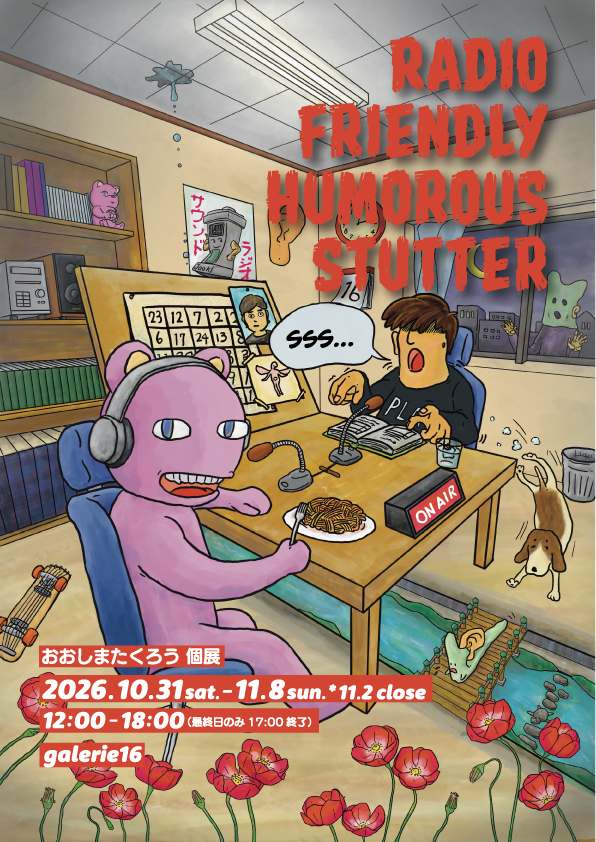
Kyoto City University of Arts Gallery and Kyoto Experiment are pleased to present a two-person exhibition featuring Kaori Endo and Mithu Sen. Both artists explore the space between what appears on the surface and what lies beneath it, approaching this space in distinct ways. Endo turns her attention to the layers of memory and dreams, while Sen explores the shifting boundary between revealing and concealing. What comes into view, and what remains unseen, is left open to each visitor. Kaori Endo "The Sleep in the 22nd C." The blending of cultures via the silk road, the inextricable nature of the colors red and blue, contemporary society, and war. Kaori Endo, whose practice draws on craft methodologies to shed light on people’s everyday experiences, has assembled multi-layered motifs and fragments of memories, exploring the relationship between how things appear on the surface and what lies beneath. The piece takes form through a large boat-like structure and textiles such as kimono obi and carpet. Mithu Sen "Unwritten Intimacy" Based in India, Mithu Sen is an interdisciplinary artist whose practice, grounded in radical hospitality, questions language, institutional authority, and so
Special Exhibition | Saga Arashiyama Museum of Arts and Culture
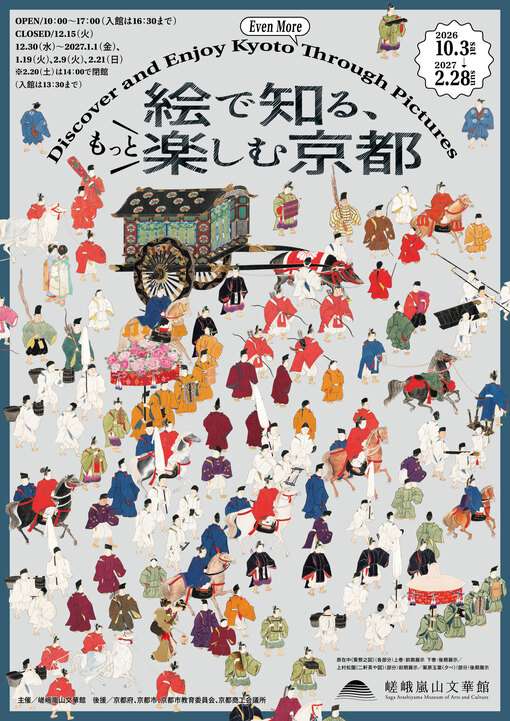
Kyoto was founded more than a thousand years ago. Its historic sites, sacred precincts, and charming townscapes have made it a global destination for travelers. In this exhibition, as painted during the early-modern and into the modern period, you can enjoy Kyoto’s enduring attraction.
Discover And Enjoy Kyoto Even More Through Pictures
Kyoto was founded more than a thousand years ago. Its historic sites, sacred precincts, and charming townscapes have made it a global destination for travelers. In this exhibition, as painted during the early-modern and into the modern period, you can enjoy Kyoto’s enduring attraction.
The famous places, traditional events, and distinctive culture that attracted the artist's eye still fascinate both Japanese and overseas visitors. The show features Scenes in and Around Central Kyoto (first show period), Scenes Outside Central Kyoto (middle and late show period), and Hara Zaichū's (1750−1837) Aoi Matsuri Scroll (sections on display in each period). You can both feast your eyes on depictions of iconic Kyoto geiko and maiko, and savor paintings of well-loved Kyoto vegetables. In this city known for its long-established shops, packaging has long brought delight to urban culture. Japanese sweet shops even commissioned top artists to design wrapping. Here you can see examples created by Tomioka Tessai (1836−1924), Ikeda Yōson (1895−1988), and others. Whether you are a first-time visitor or a resident, we hope the art in this exhibition helps you to discover things you didn’t know and to
Leica Camera Japan is pleased to present “Dérive”, a solo exhibition by photographer Mitsuru Wakabayashi, at Leica Gallery Kyoto. As he walks through the city, there are moments when a particular scene unexpectedly captures his attention. Mitsuru Wakabayashi has spent years photographing these fleeting encounters. Rather than searching for extraordinary places or dramatic events, Wakabayashi finds inspiration in the subtle details of everyday life. Drawn by a passing scene, he pauses, releases the shutter, and preserves a moment that might otherwise go unnoticed. Through the quiet accumulation of such encounters, his photographic vision has taken shape.
The exhibition title, Dérive, is a French term meaning "drift." Developed by the Situationist International movement in the 1950s, the concept describes a way of experiencing the city not merely as a route between destinations, but through wandering and responding intuitively to its atmosphere and surroundings. Wakabayashi encountered the concept while reflecting on his own long-standing approach to photography. Although he often could not explain why a particular place drew his attention, the act of walking without purpose and res
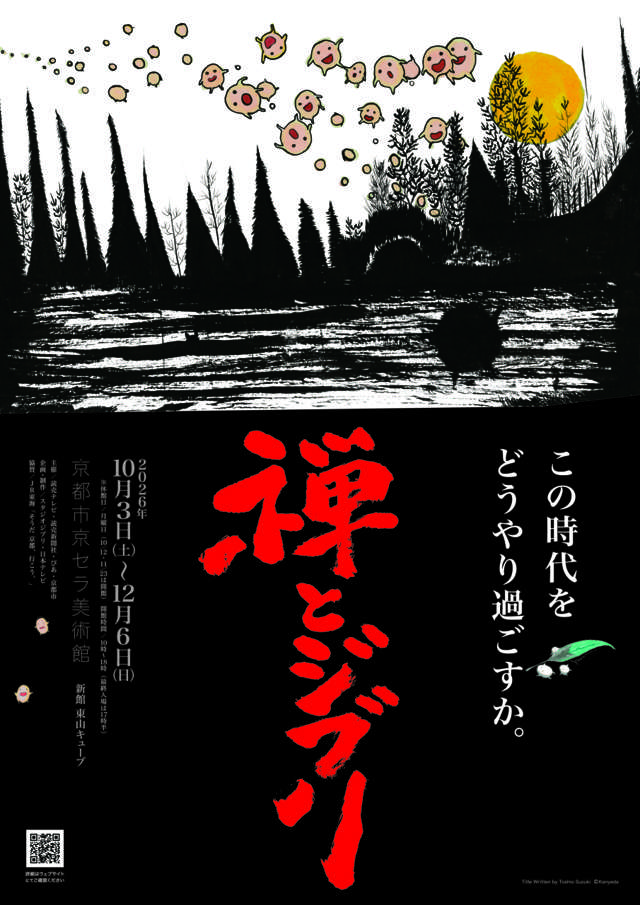
An immersive exhibition exploring Zen through the works of Studio Ghibli. The Zen and Studio Ghibli Exhibition will be held in autumn 2026 at the Higashiyama Cube, New Building of the Kyoto City KYOCERA Museum of Art. Based on the book Zen and Ghibli , which compiles conversations between Studio Ghibli producer Toshio Suzuki and Zen monks, this exhibition offers a unique, experiential way to encounter a Zen-like sense of acceptance through Ghibli’s works. Ghibli films often embody a worldview that does not divide good and evil, leaves space instead of rushing to answers, and embraces the attitude of “accepting without fully understanding.” This resonates deeply with the Zen principles of “not dividing,” “not judging,” and “seeing things as they are.” The Boy and the Heron (2023), the latest film by Hayao Miyazaki, which attracted audiences worldwide, leaves a quiet, lingering impression without offering clear answers. This exhibition is structured around that film, revealing a Zen-inspired way of seeing that shapes Ghibli’s world.
Special Exhibition The Tale of Genji: Radiant Culture of the Japanese Imperial Court
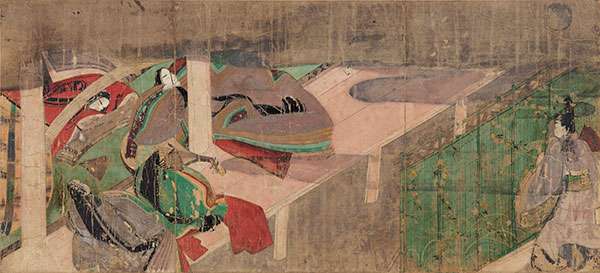
The Tale of Genji , written during the Heian period (794–1185) by Lady Murasaki Shikibu (dates unknown), is Japan’s most esteemed literary classic and is widely regarded as the world’s first novel. Set against the rarefied world of the imperial court, the story recounts the romantic entanglements of the “shining prince” Genji with an array of distinctive women, while providing vivid glimpses into daily life and the human psyche. Murasaki’s tale has enchanted successive generations over the past millennium, giving birth to a broad range of cultural and artistic forms. This exhibition of unprecedented scale presents a diverse array of approximately 250 artworks (planned total, including those shown at other venues). These encompass masterful paintings and works of decorative art inspired by scenes from the Tale and its motifs, later manuscript editions and commentaries produced by successive generations, and works tracing the novel’s influence on the performing arts. Among the highlights are the Blue-Cover edition ( Aobyōshi bon ), a manuscript edited by Fujiwara no Teika (1162–1241), and the elusive “Phantom Genji Scrolls” (also known as the Moriyasu edition), a lavish set of illust
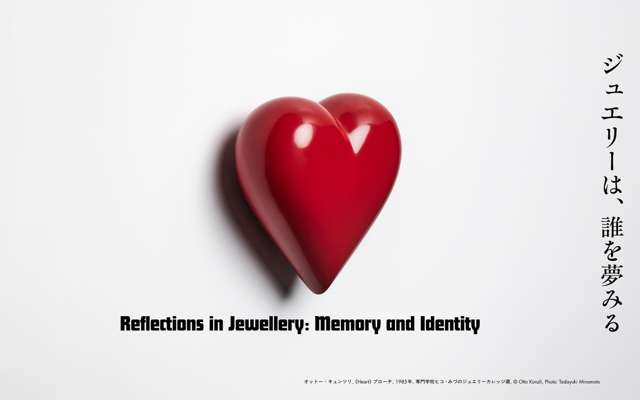
What kind of jewellery truly suits you? This shouldn't be dictated by the opinions of others or by your age, nor does it have to come from an expensive brand; rather, it should be something that expresses how you feel right now, empowering you to live with strength and fulfilment. This exhibition showcases the work of artists who are exploring this very aspiration. It was 1964, in an era when jewellery was not yet mainstream in Japan, that Hiramatsu Yasuki (1926–2012), Hishida Yasuhiko (1927–1981) and others established the Japan Jewellery Designers Association (JJDA). The ‘International Jewellery Arts Exhibition’ (held at the Seibu Department Store in Shibuya from 1970 to 1986), organised primarily by the JJDA, introduced Western trends to Japan and helped to disseminate the concept of design as a value distinct from that of materials alone. In the late 1970s, Japan was introduced to jewellery which engaged conceptually with the distinctive characteristics of the medium and echoed contemporary art. Known as ‘contemporary jewellery’, this work offered expressions that subverted the traditional roles of wealth and symbolic status, as well as the relationship between the wearer and t
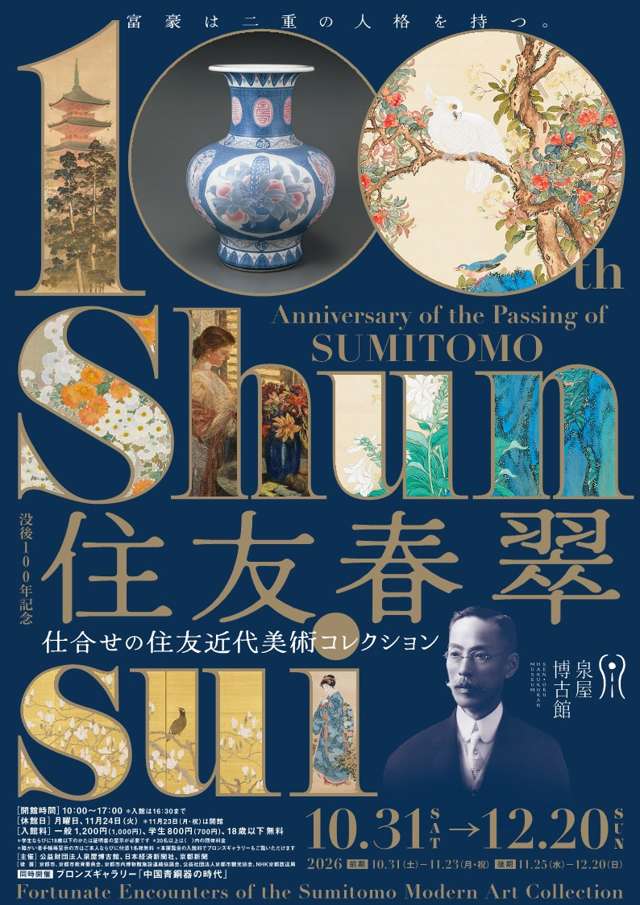
Special Exhibition: 100th Anniversary of His Death - Sumitomo Shunsui - The Sumitomo Collection of Modern Art
To commemorate the 100th anniversary of the death of Sumitomo Kichizaemon Tomozumi (pen name: Shunsui, 1864–1926), the 15th head of the Sumitomo family who laid the foundation for the Sen-oku Hakukokan Museum's collection, we will introduce works associated with him. We will trace his interactions with artists who lived during the same era through the Japanese paintings, Western paintings, and crafts in our collection. Furthermore, we will re-examine his aesthetic sense through the works that interested him, and take this opportunity to reconsider the history of the collection's formation, including the background of its collection and the historical context of its time.
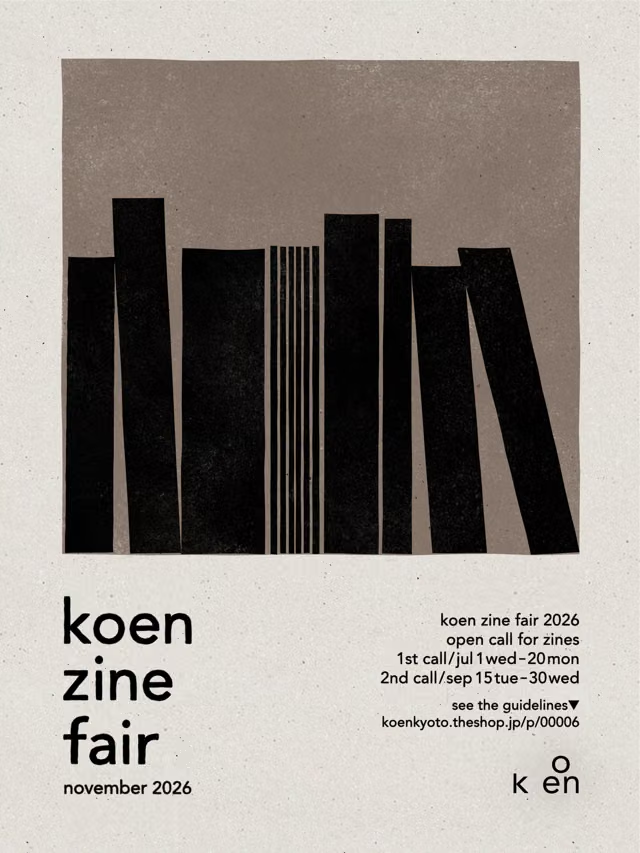
We are looking for submissions of works to be featured at the zine exhibition and sale "koen zine fair" scheduled to be held in November. We welcome submissions of any genre or size, including photographs, illustrations, and essays. We look forward to your submissions. Dates: November 5th (Thu) - November 23rd (Mon, public holiday), 2026 *Closed on Mondays and Tuesdays Venue: koen 2F gallery 15-2 Ichijoji Tsukamoto-cho, Sakyo-ku, Kyoto City, Kyoto Prefecture 606-8176 [Submission Period] 1st Submission Period: July 1st (Wed) - 20th (Mon), 2026 2nd Submission Period: September 15th (Tue) - 30th (Wed), 2026 [How to Apply] Please submit the application form and send one copy of your work within either submission period. *If a sample is not sent within the submission period, your application may not be accepted. For details, please check the application guidelines listed on the application form.
Art Collaboration Kyoto (ACK) is an art fair held in Kyoto with collaboration at its core. One of the leading art fairs in Japan specializing in contemporary art, and a total of 72 galleries from Japan and around the world will gather in ICC Kyoto.
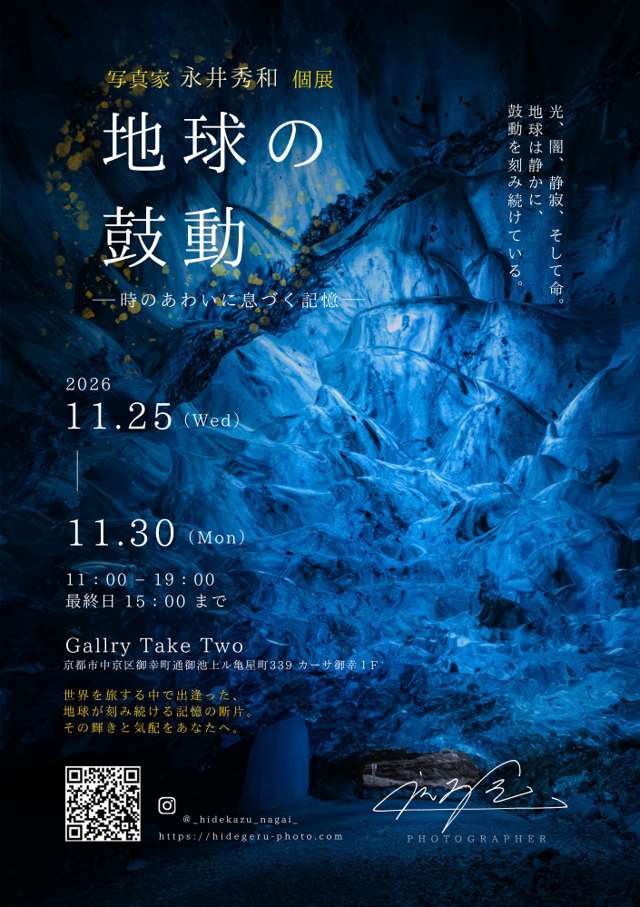
The pulse of the Earth - Memories that breathe in the gaps of time -
November 25th (Wed) - November 30th (Mon), 2026, 11:00 AM - 7:00 PM (until 3:00 PM on the last day)
Photographer Hidekazu Nagai Solo Exhibition
Fragments of memories etched by the Earth, encountered during his travels around the world. Bringing their brilliance and presence to you.
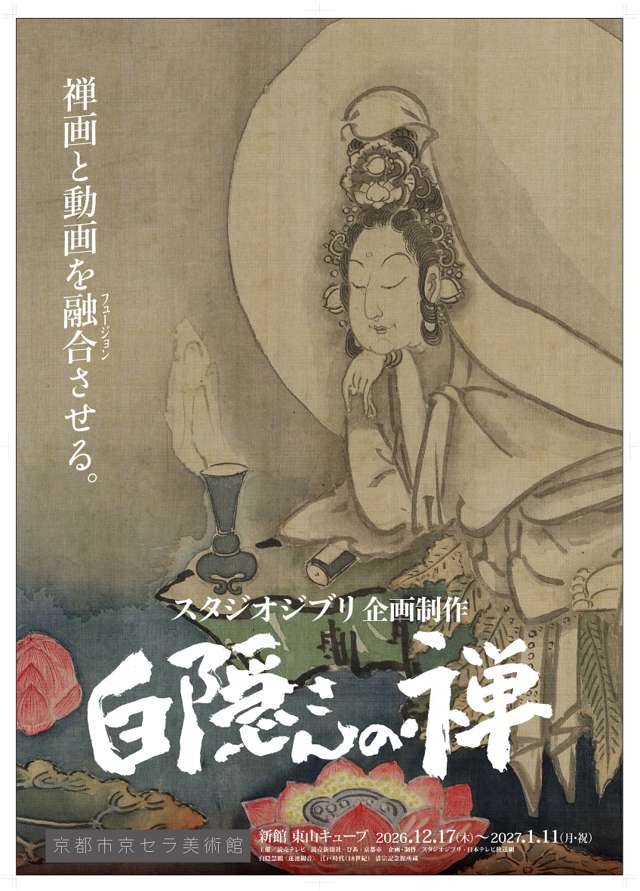
This winter in Kyoto. Now is the time for Hakuin. Studio Ghibli presents the exhibition "Hakuin's Zen," which will be held at the Higashiyama Cube in the new building. This exhibition is the second part of the "Zen and Ghibli" Kyoto exhibition, which allows visitors to experience Zen through Studio Ghibli works, and is an art exhibition that displays the works of Hakuin Ekaku, a Zen monk of the Rinzai school, along with video content. Hakuin, who lived during the Edo period, was a renowned monk who dedicated himself to spreading Zen teachings to the people through numerous calligraphic works and paintings, and is known as the "restorer of Rinzai Zen." What if Hakuin were alive today...? Would he not only create calligraphic works but also animation to spread the teachings of Zen? This exhibition was conceived from such an idea. This exhibition will display Hakuin's finest works and express the grand and profound messages contained in his works for the modern age through video. Please look forward to this new project from Studio Ghibli that goes beyond animation.
Moto Hagio Exhibition: Celebrating the 30th Anniversary of the Museum's Opening – A Longing for Europe
This exhibition showcases a collection of precious original drawings by Moto Hagio, one of Japan's leading manga artists, with a European theme. Held at our museum, which houses the Oyamazaki Villa (main building), a Western-style building characterized by its English Tudor Gothic architecture, the exhibition offers a chance to explore the captivating world of Hagio's artwork.
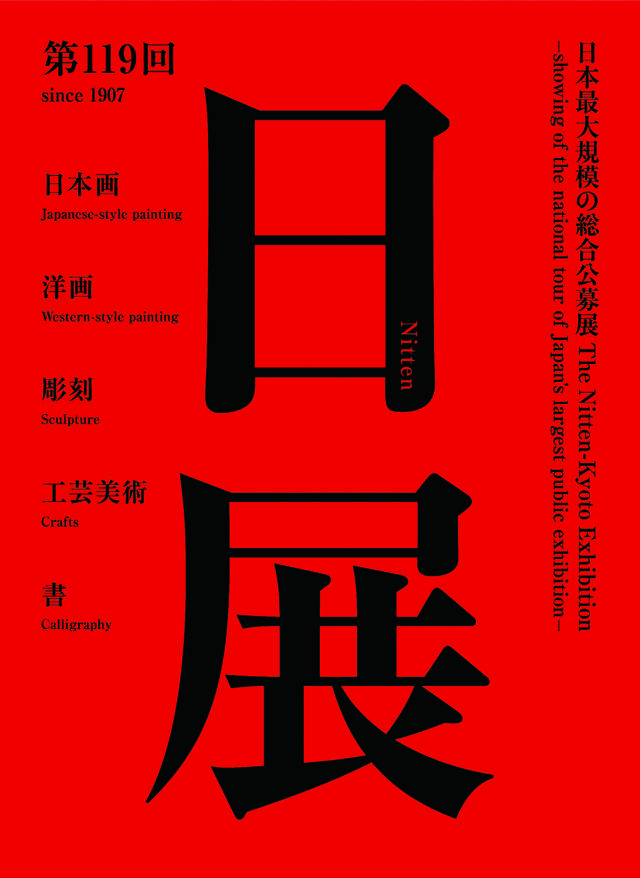
The 119th Nitten in Kyoto, showing of the national tour of Japan’s largest public exhibition, will feature about 500 artworks related to Kyoto and Shiga across the 5 traditional Nitten categories (nihonga, Western painting, sculpture, crafts, and calligraphy).
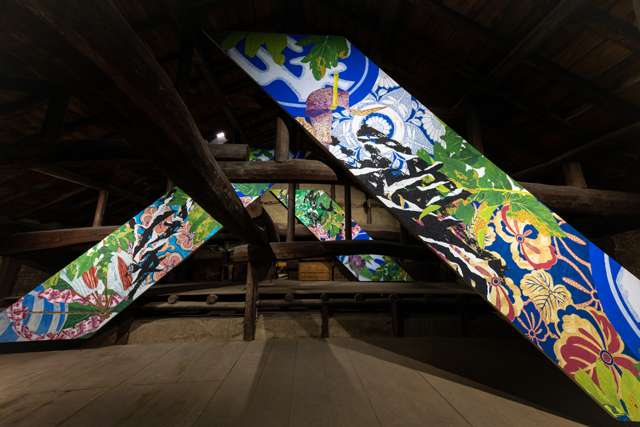
Fujino Yumiko is an artist who expands nihonga (Japanese-style painting) into three-dimensional space while remaining rooted in its traditional materials and techniques. By allowing her works to stand free from the wall, she brings attention to the “gaps” between the artwork and its surroundings, engaging viewer’s movement, the ambient light of the exhibition space, and subtle senses of presence. Her practice often begins with research into abandoned houses in various regions, places that still bear traces of everyday life. Drawing on these sites, Fujino incorporates into her paintings elements that evoke the passage of time, creating landscapes where layered temporalities and human memories intersect. This exhibition invites viewers to reconsider nihonga not as a self-contained, flat medium, but as an open field that connects with time and space, suggesting new possibilities for nihonga in contemporary art. The Triangle The Triangle (basement level of the Northwest Entrance, free admission) is a space newly created to mark the renewal opening of the Kyoto City KYOCERA Museum of Art. It aims to nurture and support emerging artists, while also providing a space where visitors, inclu
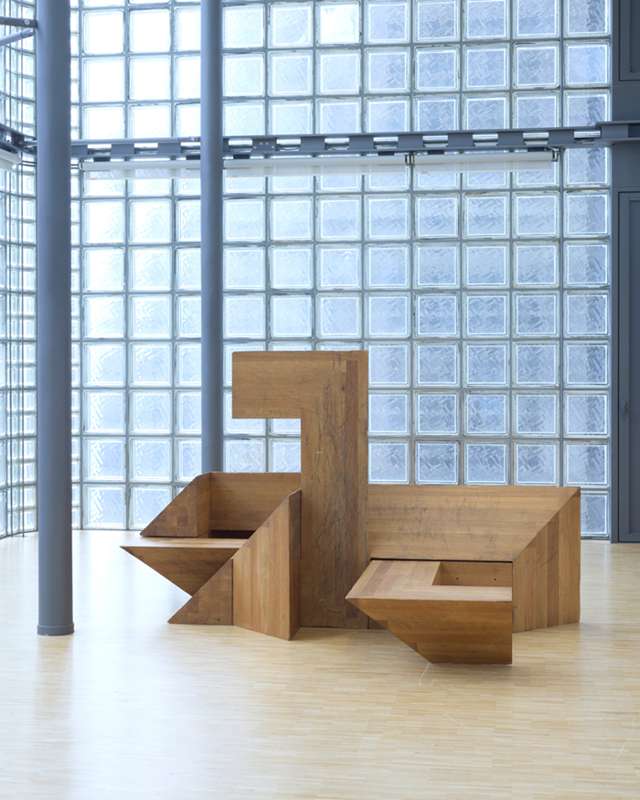
This exhibition explores the creative depths of Raphaël Zarka (1977-), a Paris-based artist who investigates geometric forms, and Horiuti Masakazu (1911-2001), a pioneer of abstract sculpture in Japan, focusing on the shared theme of “The Thinking Sculptor” to unravel the intellectual pursuits of both artists, which transcend national and temporal boundaries. The display will feature not only completed works but also precious archive materials such as sketches, notebooks, and maquettes, giving visible form to the creative process and revealing how geometric forms are derived from logical thought. In addition, special attention is given to the prolific literary careers of both artists, presenting a “duet of thinking” between the pursuit of form and the process of constructing ideas through words. A key highlight is Zarka’s new body of work, developed through research into Horiuti’s sculptures, which signals a new phase of modernity. This new series represents the culmination of a spiritual dialogue between two artists and an ambitious effort to open new horizons for modernity in contemporary sculpture. Rich in intellectual stimulation, this exhibition reexamines the essence of sculp
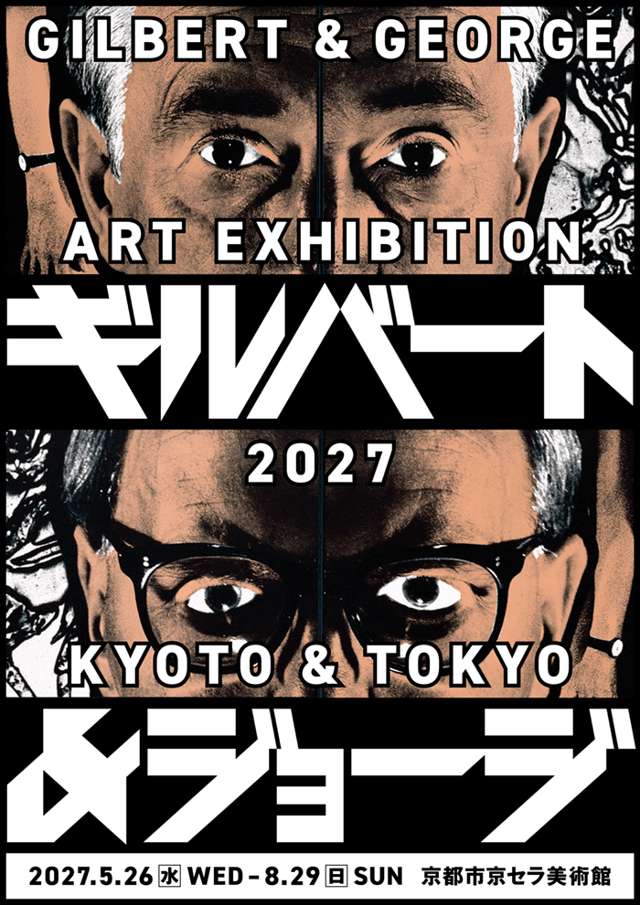
Our whole life is one big sculpture. Based in London, Gilbert & George have spent more than half a century pursuing their ideal of "Art for All." This exhibition traces the evolution of their artistic practice, from documentation of their iconic Living Sculpture, The Singing Sculpture (1969)—in which the artists, covered in multi-colour metallic powder, stood atop a table singing and moving to a popular music-hall song—to their later large-scale picture groups, addressing themes such as religion, sexuality and urban life. Rare photographs and archival footage documenting the artists' visits to Japan during the 1970s are also on view. Marking both their first major exhibition in Japan in 30 years and the 60th anniversary of their meeting in 1967, this landmark exhibition offers a rare opportunity to experience the extraordinary range of Gilbert & George's singular, sincere and uncompromising vision of art.
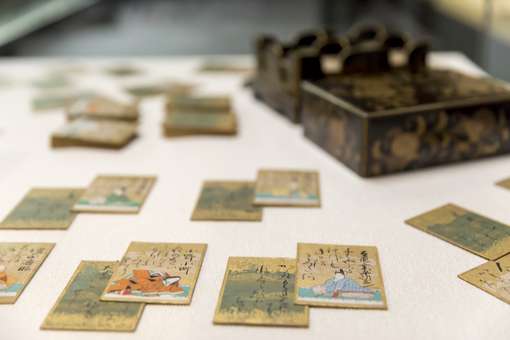
Hyakunin Isshu is an anthology of 100 poems by 100 poets. It was collected here in Saga Arashiyama 800 years ago by Fujiwara no Teika, who carefully selected each of the short waka poems. A permanent exhibition at Saga Arashiyama Museum of Art and Culture conveys the charm, and tells the history, of Hyakunin Isshu. *The museum is closed during the exhibition changeover period for special exhibitions and is not open for permanent exhibitions only. Please be aware of this in advance.
Chapter I. Sadaie, the editor of the Hyakunin Isshu Meigetsuki (reproduced in facsimile) by Fujiwara-no-Teika Chapter II. The Hyakunin Isshu as a form of education Momiji Hyakunin Isshu Ogura Nishiki, 1792 (woodblock print) Hyakunin Isshu Hina Karuta, Meiji era (printed on paper) Chapter III. From amusement to competitive karuta Ogurayama Hyakkei Sugoroku (One hundred views of Mt. Ogura boardgame), late Edo period (woodblock print, multicoloured) Hyakunin Isshu Karuta, Edo period Ita karuta (board karuta), 1945 Chihayafuru Kokurayama Cup championship commemorative fan *Please be aware that the works on display change according to the time of year. You can refer to the latest exhibits on the list of work
An arts and culture facility in the former Meirin Elementary School near Shijo-Karasuma, with exhibitions, performances, workshops, studios, a cafe and library open to visitors.
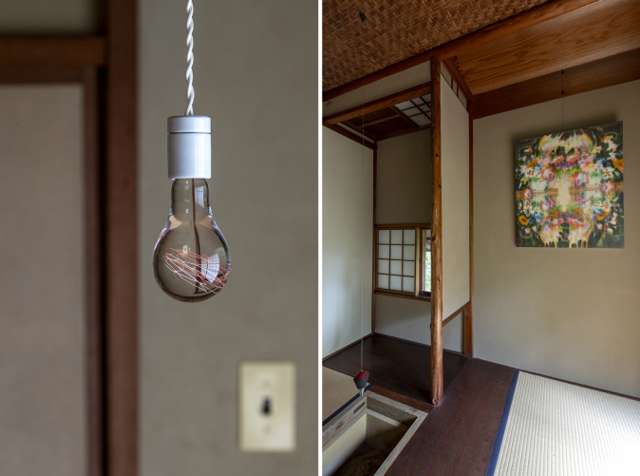
A kogei gallery and salon near the Philosopher's Path, presenting Japanese hand-crafted wares and works for a contemporary lifestyle in a historic building once connected to painter Chokunyu Tanomura.
A Kyoto gallery and shop focused on handmade tableware, tea and works by artists, potters, woodworkers and lacquer artists, with retail prices set by the makers.
Founded by painter Insho Domoto in 1966, the museum presents works shaped by his belief in breaking with tradition to create new art; he also designed the building inside and out.
A converted wood warehouse in quiet Iwakura that combines a handmade Japanese footwear atelier with a gallery introducing selected objects, clothing, craft and cultural events.
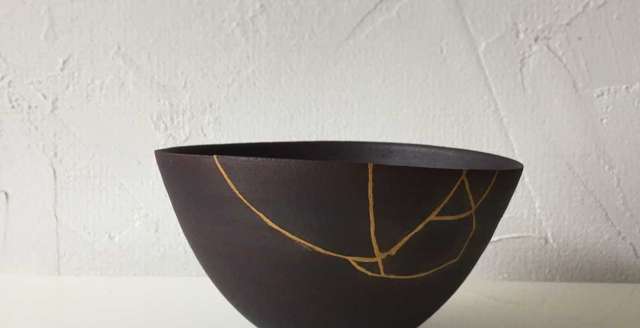
A gallery shop near Ginkakuji and the Philosopher's Path, presenting ceramics, kintsugi and contemporary craft in an old house setting, with opening days announced on Instagram.
ARTCOURT Gallery's appointment-only Kyoto viewing room, opened in 2018 in a Kitashirakawa residence designed around nature, art and time spent in a living space.
Although set in the heart of the lively Gion area, the museum offers you a quiet haven once you step inside. Its fifth floor features a Sun Garden and a tea arbor designed to allow visitors to view the exhibits in natural light. The museum holds special exhibitions of modern and contemporary paintings, crafts, photos, calligraphic works, and more, centering on the collections of works by Japanese-style painter Kagaku Murakami, oil painter Kaoru Yamaguchi, and multi-genre artist Rosanjin Kitaoji.